
 Finsol, India
Context and user
Finsol’s team reviews clients’ bank statements for loan credit evaluation and either outsourced it (1–2 days per client) or did it manually, which was slow and error-prone.
Problem and success metric
Finsol’s team needs an accurate analysis of a client’s bank statements quickly, without waiting days on an outside vendor or doing error-prone work by hand.
Success metric
Turnaround time per analysis. The baseline was the outsourced process: 1-2 days.
Options and trade-offs
How should the analysis get done?
Only the tool fixed speed and accuracy together, so that was the build. Cloud infrastructure was not available for processing.
Every bank formats its PDF statements differently, so building a parser for each one would have been slow and fragile. Instead, I added a short guided step where the user drags a selection over the transaction table, and we trained the team on what to select. It costs users a few seconds but makes the tool work with any bank’s statement.
Prioritisation
I prioritised these features for the team.
- 3
Features prioritised
- Merge multiple bank statements into one, giving a single document of different periods from the same client
- Identify loan and EMI transactions
- Month-wise analysis
What shipped
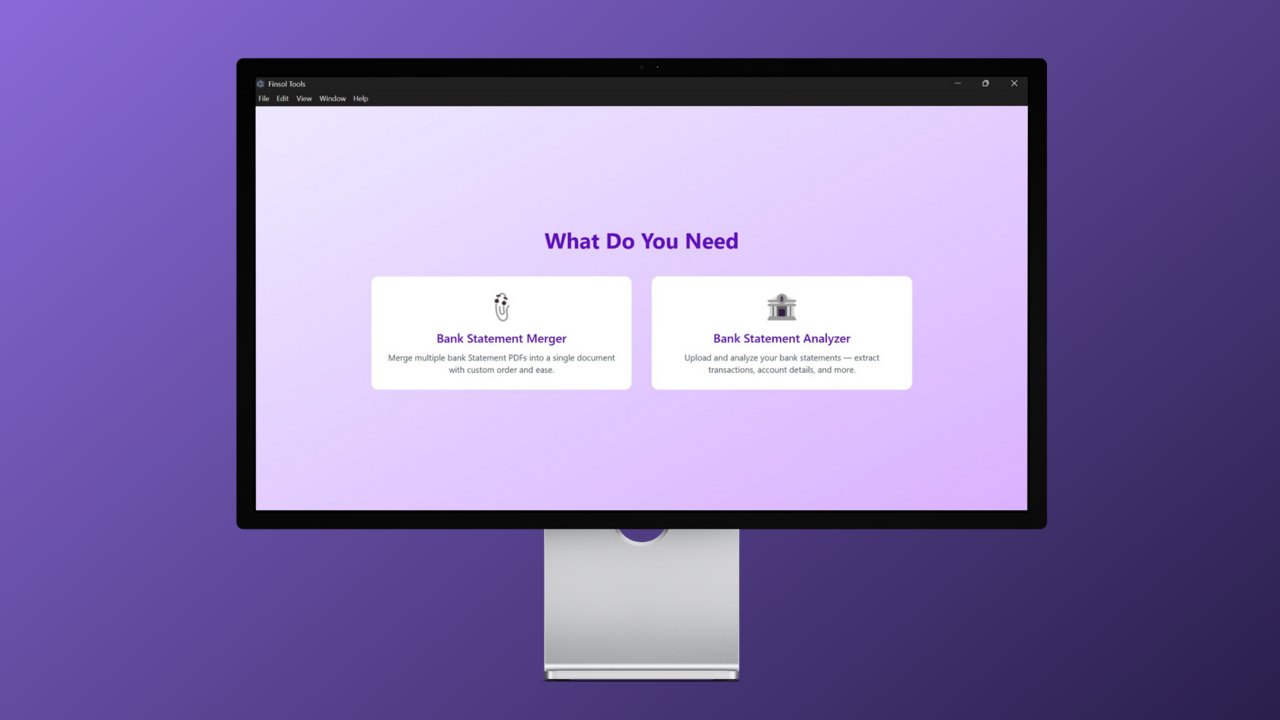
The user uploads one or more statements, enters a few details, and drag-selects the transaction table. The tool merges the statements, an LLM classifies each transaction as EMI/loan-related or not, and the team gets a month-wise cash-flow analysis for loan credit evaluation in under 10 minutes.
User flow
- Add a client’s statements
- Merge into one statement
- Flag loan and EMI transactions
- Read the month-wise analysis
Result
- 1-2 days per analysis before, when it was outsourced
- 5-10 min per analysis with the tool
Users love the speed: a 5-10 minute wait is very little next to the 1-2 days it used to take. That improved turnaround on credit evaluations and gave teams quick, actionable insights, boosting efficiency and reducing operational costs.
Merging and analysis happen on the same platform, so there is no need to switch between tools.
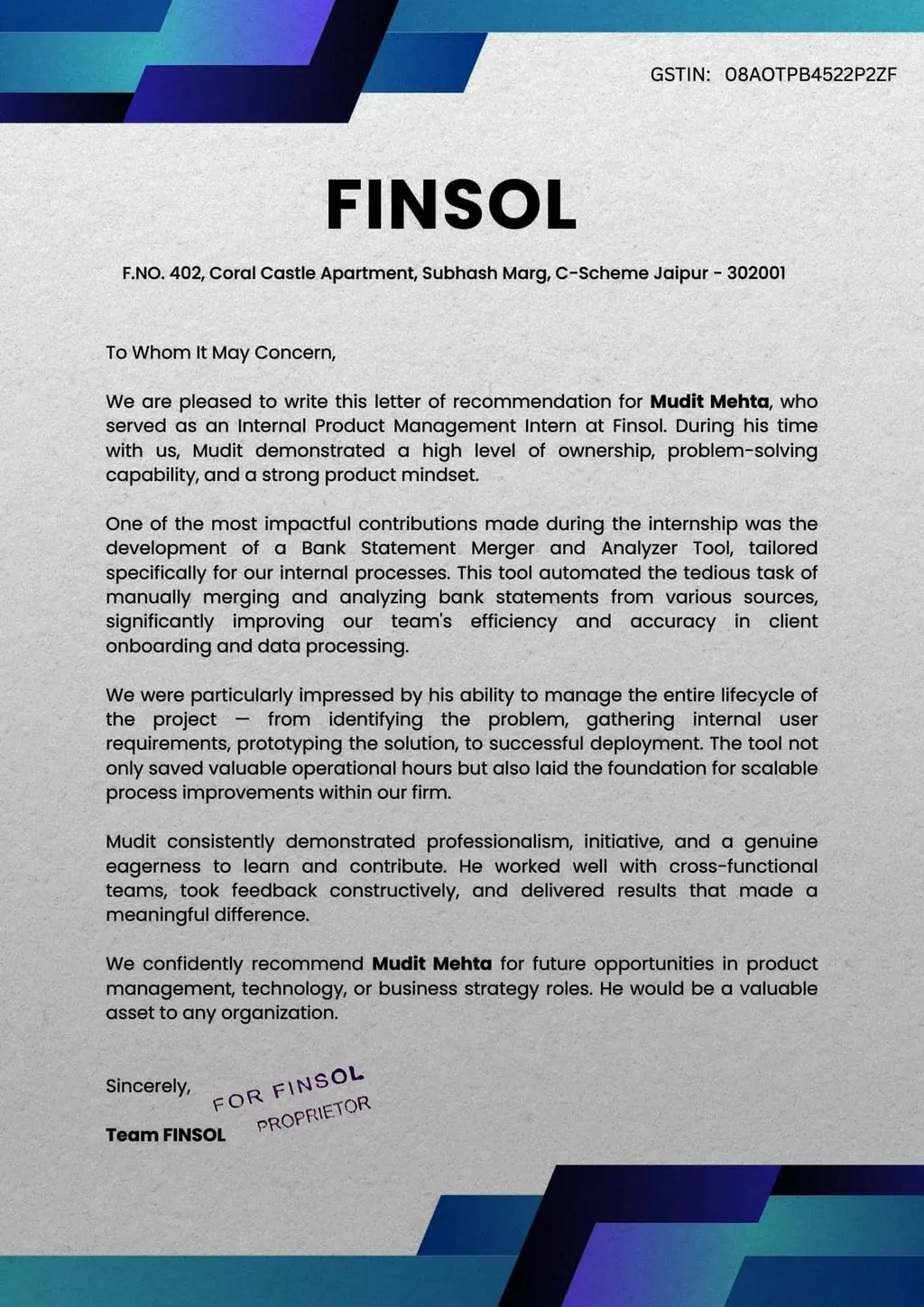
The stakeholders gave me a letter of recommendation after I completed my internship.
What I would do next
- Measure how accurate the LLM’s EMI/loan classification is against manual review.
- Reduce the manual selection step by auto-detecting the transaction table.
What I learned
- A small, guided manual step can beat building a complex solution for every edge case.
- Using the team’s existing workaround as the baseline made the impact easy to measure.